
A recommendation from a friend and an interesting chat over a coffee led to a collaboration with artist Jonathan Huxley to explore emergent behaviour and whether his paintings of stylised figures in crowds could be simulated on a computer.
Jonathan’s paintings of abstract people have a natural behavioural quality to them which to Jonathan just looks right. Tapping into my interest in flocking motion and the natural patterns that emerge from simple rule-based simulations.
I settled on using Blender to create the animations because of its flexibility and hiqh quality rendered output. Rather than a realtime system like Unity or Unreal as these couldn’t match the final image quality we were after.
Lots of challenges ensued, how to model the characters with just the right level of detail and render time mesh smoothign. Finding a realistic mocap sequence which could be mapped to the people, I ended up using a Mixamo animation and a dance sequence gave the right feel. Tweaking Blenders Boid simulation to get the right behaviour to emerge. Making the animations loopable. Randomising the sequences across all the instances. Getting the long exposure motion blur just right to look something like Jonathan’s paintings (one of the key reasons for using blender). creating a colour material for the characters which depends on the distance from the camera to help with the sense of depth. And a million other things, before we were both happy with the look of the movement and the patterns that emerged.
The final sequences were rendered out as a series of 10 editions, each one 18,000 frames, taking 150 hours of computing time (thank goodness for Sheepit render farm)
I minted 10 editions, each unique by seeding the algorithm with the edition number.
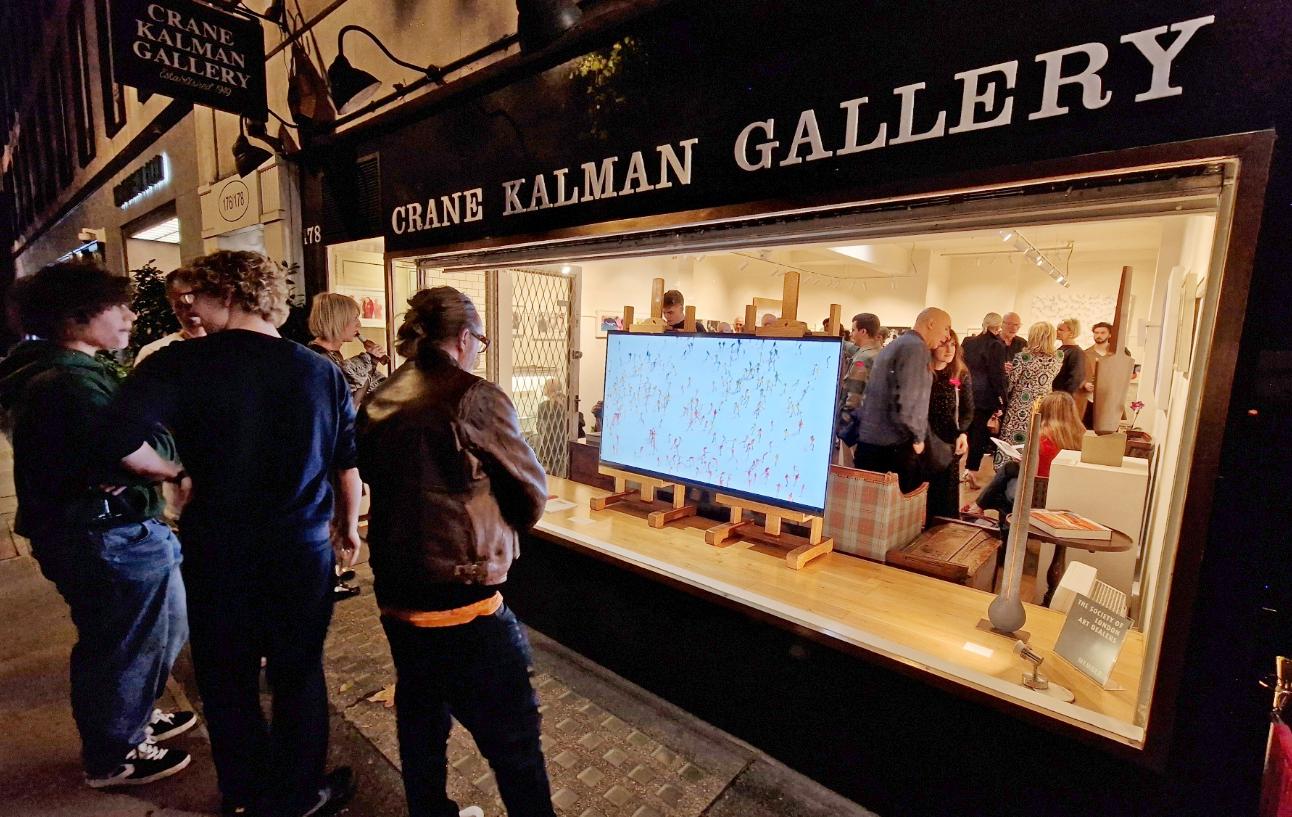
The work has been exhibited alongside Jonathan’s paintings in various exhibitions and galleries.
This project was part of the Solarflare Labs/Launch series https://solarflarestudio.co.uk/launch/the-people-jonathan-huxley/
This was a great project to work on, very technical, I learnt lots about Blender along the way and I’m very happy with the final results.
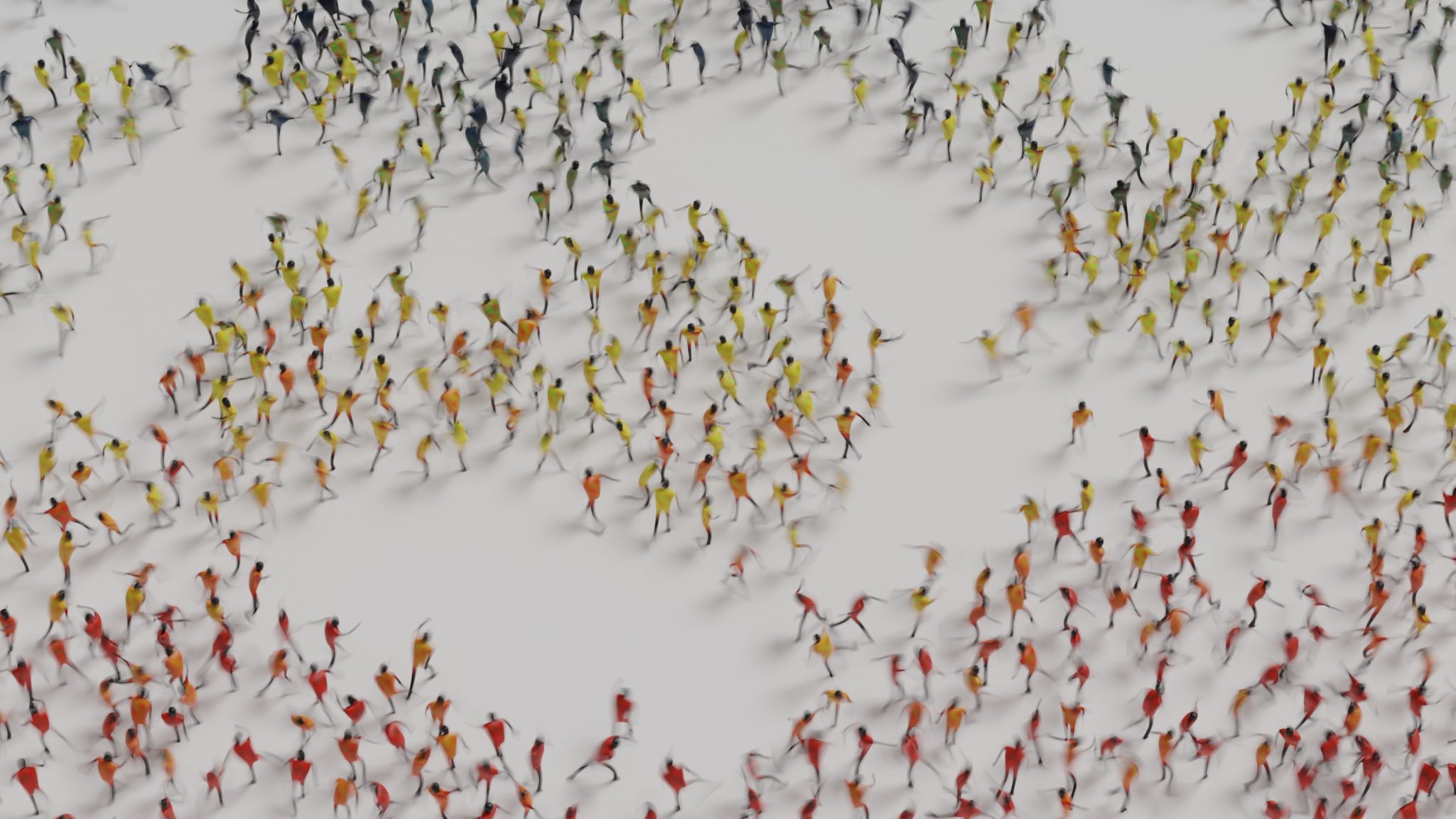
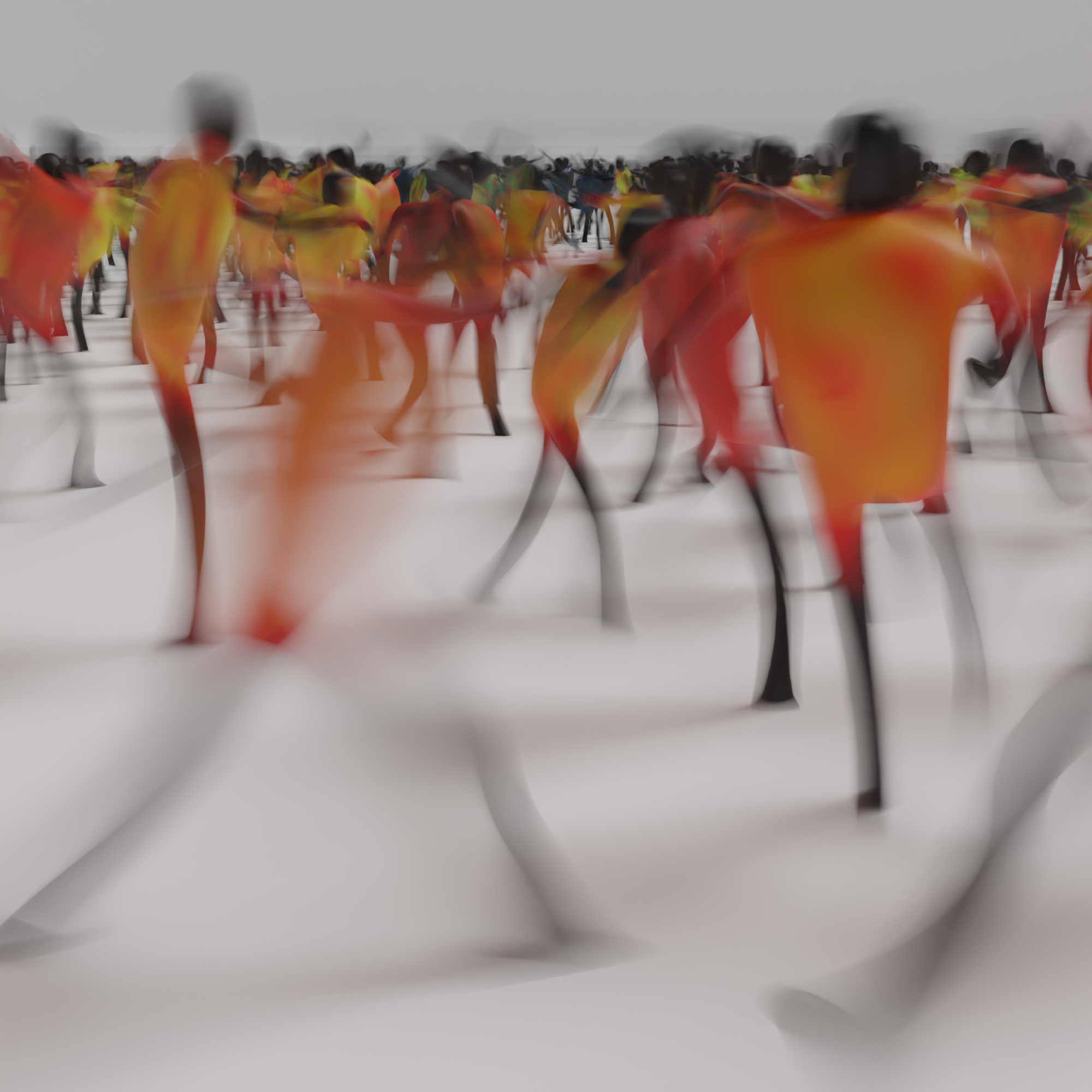
One nice side effect to this approach is the ease of creating different perspectives by simply moving the camera position, including into the crowd. Also applying different behaviours and forcefields creates all kings of different flocking patterns.
Alternative flocking patterns
Alternative perspectives
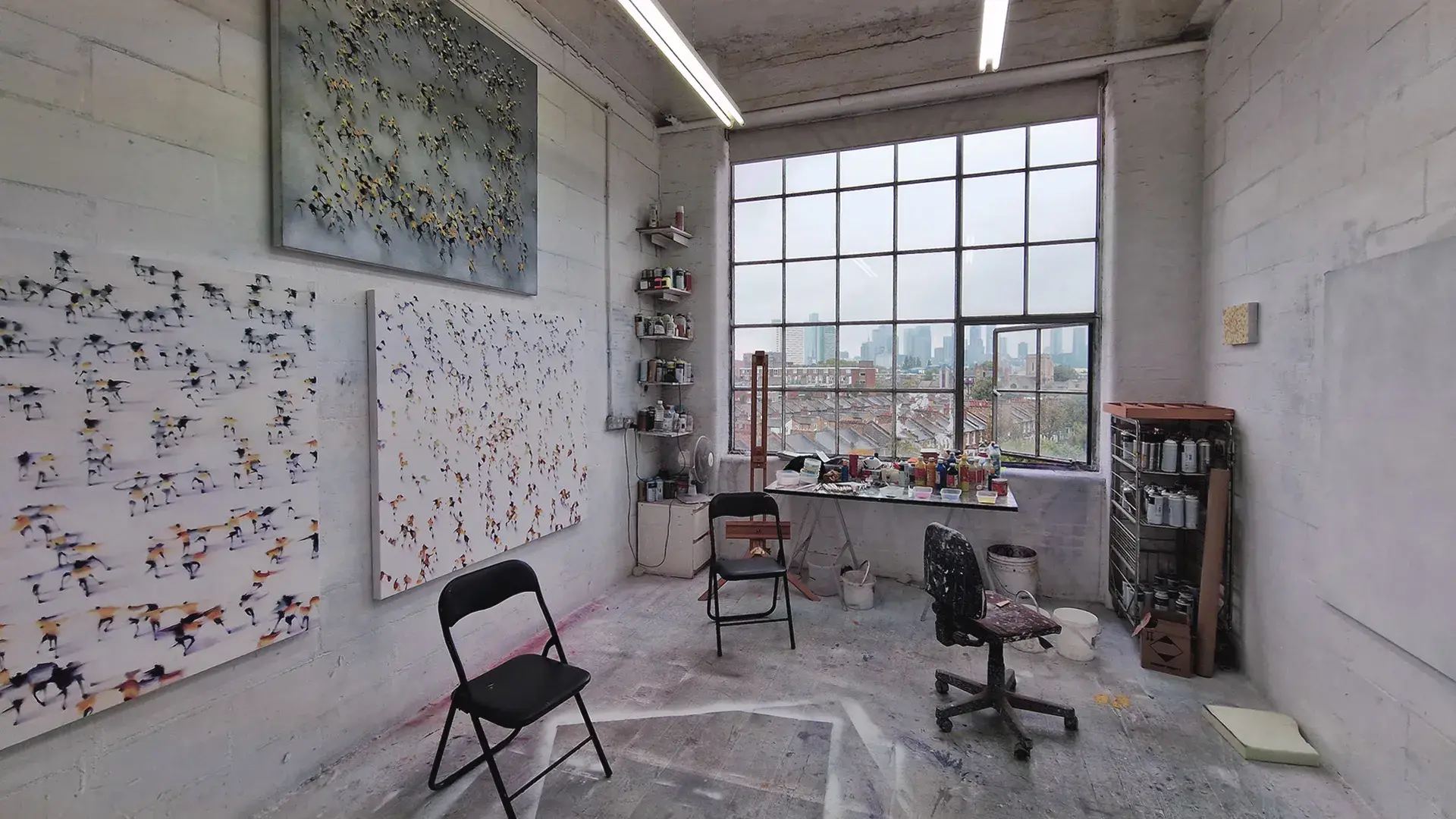
Jonathans studio in Grenwich
The People being exhibited at the Crane Kalman Gallery
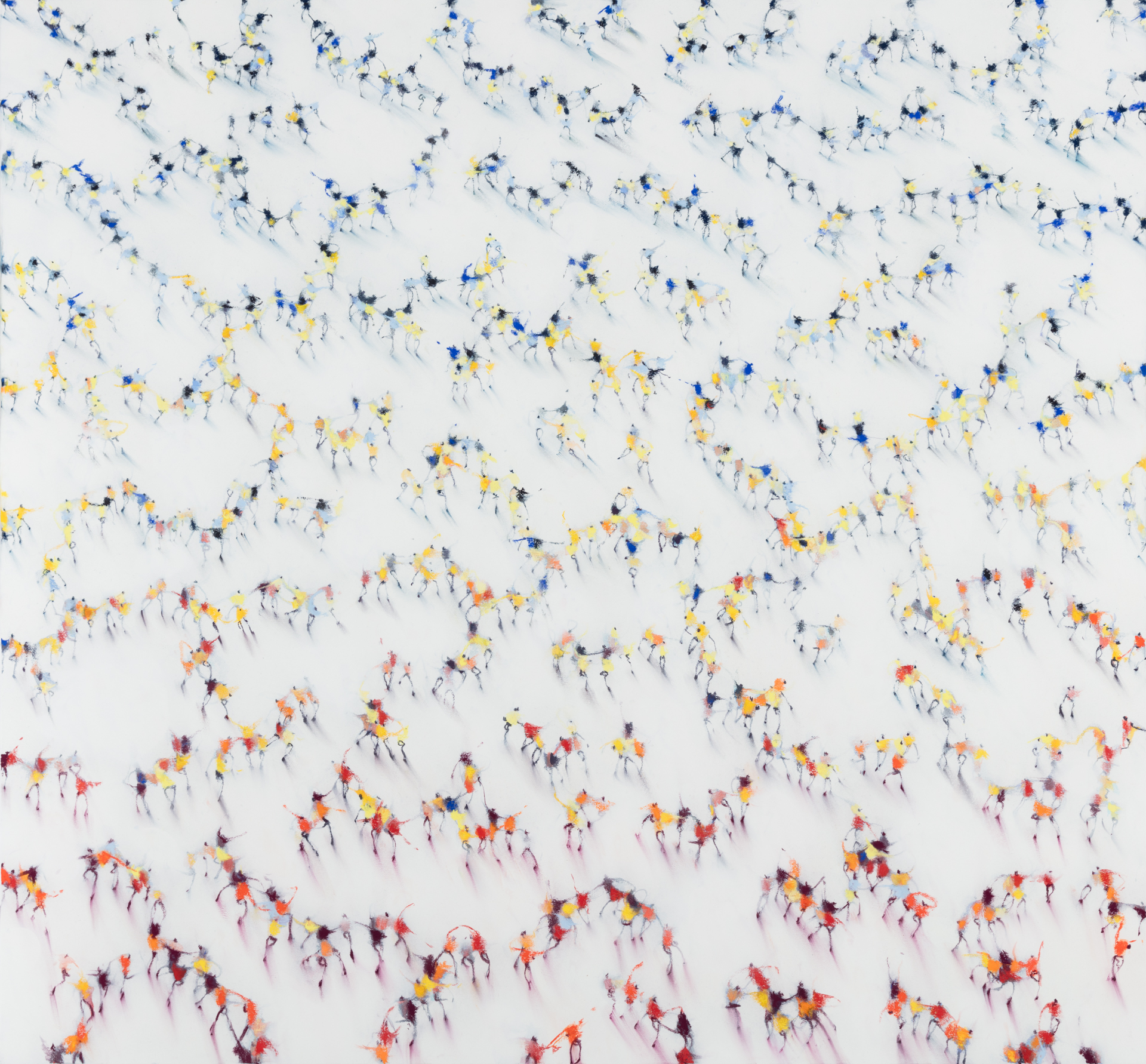
One of Jonathans paintings using similar colours to The Peopel
I experimented with an interactive version using gaze tracking to make the people run away from wherever you looked. This used Blender, some custom scripts and a free webcam gaze tracker, worked well as a proof of concept but would need a higher framerate for a user experience. The idea was viewers could create their own unique art by looking at the canvas, freezing the action when the desired pattern was achieved. Perhaps one for the future.